Hz. Muhammed'in ﷺ hayatı yıl yıl, yalnızca Kur'an ve sahih hadislerden. Tarihçilerin tarihlerde ayrıştığı yerleri belirtiyoruz.
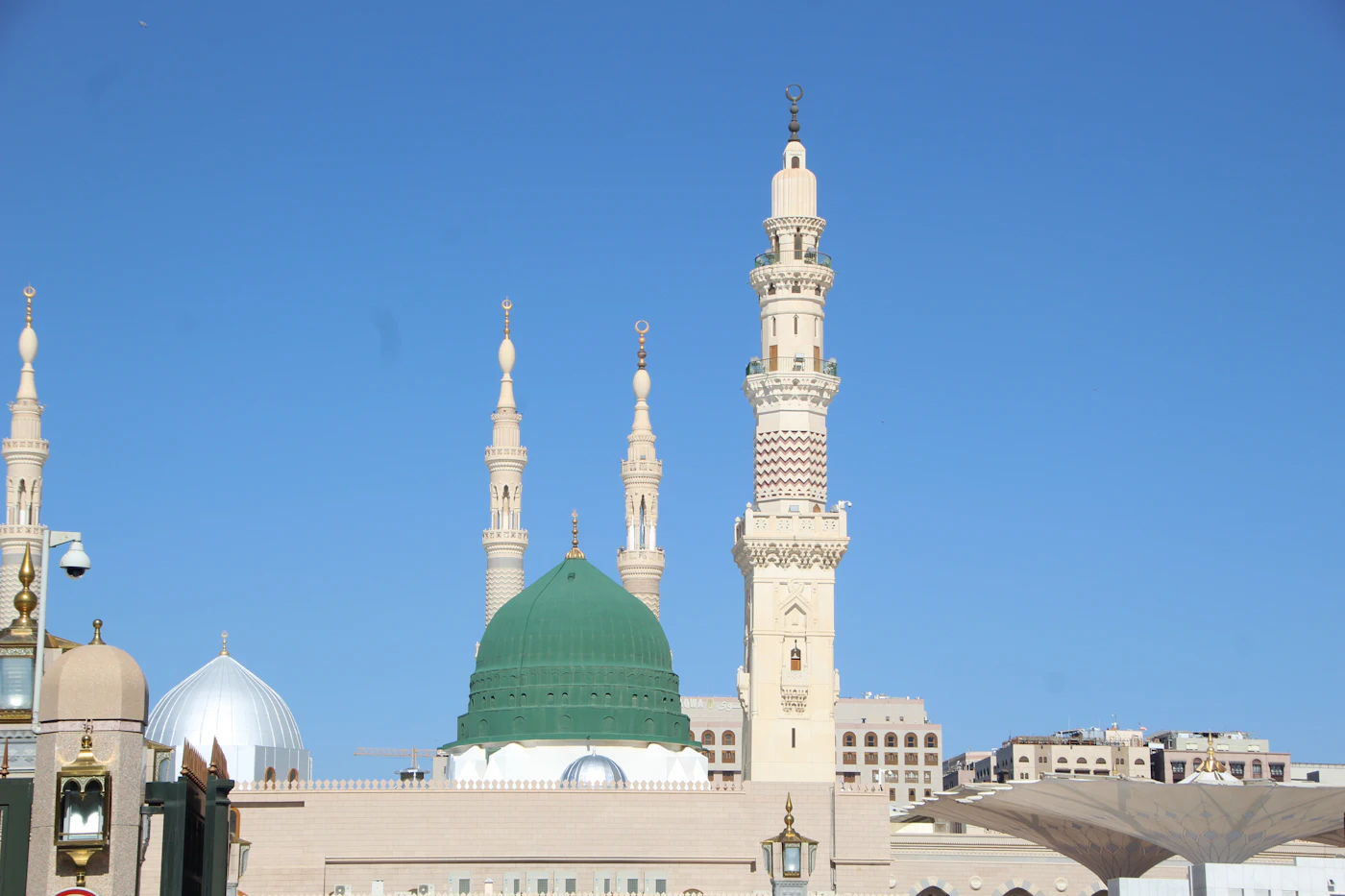
Al-Masjid an-Nabawi · Photo: Unsplash
Zaman çizelgesi
c. 570—
Mekke'de doğumu
Peygamber ﷺ, Fil Yılı olarak bilinen yılda, yaklaşık 570'te Mekke'de doğdu; kesin tarih tarihçiler arasında tartışmalıdır. Kendisi, pazartesinin doğduğu ve kendisine vahyin geldiği gün olduğunu söylemiştir. Babası doğumundan önce vefat etmiş, o da yetim olarak dedesinin, sonra amcasının himayesinde büyümüştür. Kur'an hatırlatır: O seni yetim bulup barındırmadı mı?
Abu Qatada al-Ansari (Allah be pleased with him) reported that the Messenger of Allah (ﷺ) was asked about his fasting. The Messenger of Allah (ﷺ) felt annoyed. Thereupon 'Umar (Allah be pleased with him) said:We are pleased with Allah as the Lord, with Islam as our Code of Life, with Muhammad as the Messenger and with our pledge (to you for willing and cheerful submission) as a (sacred) commitment. He was then asked about perpetual fasting, whereupon he said: He neither fasted nor did he break it, or he did not fast and he did not break it. He was then asked about fasting for two days and breaking one day. He (the Holy Prophet) said: And who has strength enough to do it? He was asked about fasting for a day and breaking for two days, whereupon he said: May Allah bestow upon us strength to do it. He was then asked about fasting for a day and breaking on the other, whereupon he said: That is the fasting of my brother David (peace be upon him). He was then asked about fasting on Monday, whereupon he said: It was the day on which I was born. on which I was commissioned with prophethood or revelation was sent to me, (and he further) said: Three days' fasting every month and of the whole of Ramadan every year is a perpetual fast. He was asked about fasting on the day of 'Arafa (9th of Dhu'I-Hijja), whereupon he said: It expiates the sins of the preceding year and the coming year. He was asked about fasting on the day of 'Ashura (10th of Muharram), whereupon be said: It expiates the sins of the preceding year. (Imam Muslim said that in this hadith there is a) narration of Imam Shu'ba that he was asked about fasting on Monday and Thursday, but we (Imam Muslim) did not mention Thursday for we found it as an error (in reporting).
Peygamberlikten önce Mekke'de dürüstlüğü ve güzel ahlakıyla tanınırdı. Kureyş'in saygın kadınlarından Hatice binti Huveylid ile evlendi; tarihçiler bunu genellikle 595 civarında verir (yaş ve tarihler farklı rivayet edilir). Hatice malı ve kalbiyle onu destekledi ve ona ilk iman eden oldu. Peygamber ﷺ onu dünyanın en hayırlı kadınlarından saydı.
Narrated `Ali:I heard Allah's Messenger (ﷺ) saying (as below) Narrated `Ali: The Prophet (ﷺ) said, "The best of the world's women is Mary (at her lifetime), and the best of the world's women is Khadija (at her lifetime).
Kırk yaşlarında Hira mağarasında yalnızca Allah'a ibadet ederdi. Cebrail gelip "Oku!" dedi ve Alak suresinin ilk ayetleri indi. Titreyerek Hatice'ye döndü; o da "Allah seni asla utandırmaz" diyerek onu teselli etti. Vahyin bir süre kesilmesinden sonra, kalkıp uyarmasını emreden Müddessir suresi indi.
Narrated 'Aisha (the mother of the faithful believers):The commencement of the Divine Inspiration to Allah's Messenger (ﷺ) was in the form of good dreams which came true like bright daylight, and then the love of seclusion was bestowed upon him. He used to go in seclusion in the cave of Hira where he used to worship (Allah alone) continuously for many days before his desire to see his family. He used to take with him the journey food for the stay and then come back to (his wife) Khadija to take his food likewise again till suddenly the Truth descended upon him while he was in the cave of Hira. The angel came to him and asked him to read. The Prophet (ﷺ) replied, "I do not know how to read." The Prophet (ﷺ) added, "The angel caught me (forcefully) and pressed me so hard that I could not bear it any more. He then released me and again asked me to read and I replied, 'I do not know how to read.' Thereupon he caught me again and pressed me a second time till I could not bear it any more. He then released me and again asked me to read but again I replied, 'I do not know how to read (or what shall I read)?' Thereupon he caught me for the third time and pressed me, and then released me and said, 'Read in the name of your Lord, who has created (all that exists), created man from a clot. Read! And your Lord is the Most Generous." (96.1, 96.2, 96.3) Then Allah's Messenger (ﷺ) returned with the Inspiration and with his heart beating severely. Then he went to Khadija bint Khuwailid and said, "Cover me! Cover me!" They covered him till his fear was over and after that he told her everything that had happened and said, "I fear that something may happen to me." Khadija replied, "Never! By Allah, Allah will never disgrace you. You keep good relations with your kith and kin, help the poor and the destitute, serve your guests generously and assist the deserving calamity-afflicted ones." Khadija then accompanied him to her cousin Waraqa bin Naufal bin Asad bin 'Abdul 'Uzza, who, during the pre-Islamic Period became a Christian and used to write the writing with Hebrew letters. He would write from the Gospel in Hebrew as much as Allah wished him to write. He was an old man and had lost his eyesight. Khadija said to Waraqa, "Listen to the story of your nephew, O my cousin!" Waraqa asked, "O my nephew! What have you seen?" Allah's Messenger (ﷺ) described whatever he had seen. Waraqa said, "This is the same one who keeps the secrets (angel Gabriel) whom Allah had sent to Moses. I wish I were young and could live up to the time when your people would turn you out." Allah's Messenger (ﷺ) asked, "Will they drive me out?" Waraqa replied in the affirmative and said, "Anyone (man) who came with something similar to what you have brought was treated with hostility; and if I should remain alive till the day when you will be turned out then I would support you strongly." But after a few days Waraqa died and the Divine Inspiration was also paused for a while.
İlk yıllarda davet çoğunlukla gizliydi. Allah "En yakın akrabanı uyar" ayetini indirince Peygamber ﷺ Safa'ya çıkıp Kureyş boylarını çağırdı. Onu her zaman doğru sözlü bulduklarını kabul ettiler; ama Ebu Leheb onu reddetti ve Tebbet (Mesed) suresi indi. O günden sonra müminlere düşmanlık arttı.
Narrated Ibn `Abbas:When the Verse:--'And warn your tribe of near-kindred, was revealed, the Prophet (ﷺ) ascended the Safa (mountain) and started calling, "O Bani Fihr! O Bani `Adi!" addressing various tribes of Quraish till they were assembled. Those who could not come themselves, sent their messengers to see what was there. Abu Lahab and other people from Quraish came and the Prophet (ﷺ) then said, "Suppose I told you that there is an (enemy) cavalry in the valley intending to attack you, would you believe me?" They said, "Yes, for we have not found you telling anything other than the truth." He then said, "I am a warner to you in face of a terrific punishment." Abu Lahab said (to the Prophet) "May your hands perish all this day. Is it for this purpose you have gathered us?" Then it was revealed: "Perish the hands of Abu Lahab (one of the Prophet's uncles), and perish he! His wealth and his children will not profit him...." (111.1-5)
Zulüm artınca bir grup Müslüman Habeşistan'a hicret etti; orada adil bir Hristiyan kral onları korudu. Tarihçiler oraya iki hicret olduğunu bildirir; sayılar ve yıllar farklı rivayet edilir. Kur'an, Allah'ın arzının geniş olduğunu ve sabredenlere ecirlerinin hesapsız verileceğini bildirerek müminleri teselli etti.
De ki: “Ey iman eden kullarım! Rabbinizden korkup sakının. Bu dünyada iyilik etmekte olanlar için bir iyilik vardır. Allah'ın arzı geniştir. Ancak sabredenlere ecirleri hesapsızca ödenir.”
Zulme uğradıktan sonra, Allah için hicret edenleri elbette dünyada güzel bir şekilde barındıracağız. Ahiretteki mükâfatları ise çok daha büyüktür, eğer bunu bilselerdi.
Hicretten önceki yıllarda Peygamber ﷺ Hatice'yi ve amcası Ebu Talib'i kaybetti; sıkıntılar ağırlaştı. Taif halkını davet etmeye gitti, ama onu sert biçimde reddettiler. Daha sonra Aişe'ye bu günün karşılaştığı en zor günlerden olduğunu anlattı. Dağlar meleği onları helak etmeyi teklif edince, "Allah'ın onların soyundan yalnız O'na ibadet edenler çıkarmasını umarım" dedi.
Hani cinlerden bir grubu, Kur’an'ı dinlemeleri için sana yöneltmiştik. Kur’an'ı dinlemeye hazır olunca (birbirlerine); "Susup, dinleyin!" demişler, Kur'an'ın okunması bitince uyarıcılar olarak kavimlerine dönmüşlerdi.
Narrated `Aisha:That she asked the Prophet (ﷺ) , 'Have you encountered a day harder than the day of the battle) of Uhud?" The Prophet (ﷺ) replied, "Your tribes have troubled me a lot, and the worse trouble was the trouble on the day of 'Aqaba when I presented myself to Ibn `Abd-Yalail bin `Abd-Kulal and he did not respond to my demand. So I departed, overwhelmed with excessive sorrow, and proceeded on, and could not relax till I found myself at Qarnath-Tha-alib where I lifted my head towards the sky to see a cloud shading me unexpectedly. I looked up and saw Gabriel in it. He called me saying, 'Allah has heard your people's saying to you, and what they have replied back to you, Allah has sent the Angel of the Mountains to you so that you may order him to do whatever you wish to these people.' The Angel of the Mountains called and greeted me, and then said, "O Muhammad! Order what you wish. If you like, I will let Al-Akh-Shabain (i.e. two mountains) fall on them." The Prophet (ﷺ) said, "No but I hope that Allah will let them beget children who will worship Allah Alone, and will worship None besides Him."
Allah kulunu bir gece Mescid-i Haram'dan Mescid-i Aksa'ya, sonra göklere götürdü; İsrâ ve Necm surelerinde bildirildiği gibi. Sahih hadislere göre beş vakit namaz bu yolculukta farz kılındı. Kesin tarihi tartışmalıdır; hicretten bir süre önce Mekke'de gerçekleşti. Sabit olmayan bir tarihi kesinleştirmiyoruz.
Bir gece kulunu, Mescid-i Haram’dan, çevresini mübarek kıldığımız Mescid-i Aksa’ya ayetlerimizi ona göstermek için götüren (Allah her türlü noksanlıktan) münezzehtir. Şüphesiz O, her şeyi işitendir, görendir.
Hac mevsimlerinde Yesrib (Medine) halkından bazıları Akabe'de Peygamber ﷺ ile buluştu, Müslüman oldu ve ona destek sözü verdi. Ubâde b. Sâmit biatı anlatır: Allah'a hiçbir şeyi ortak koşmamak, hırsızlık ve zina yapmamak, çocukları öldürmemek, iftira etmemek ve iyilikte isyan etmemek. Bu, Medine'ye hicretin yolunu açtı.
Ey Peygamber! Mümin kadınlar, Allah’a hiçbir şeyi şirk koşmamak, hırsızlık etmemek, zina etmemek, çocuklarını öldürmemek, elleri ve ayakları arasında bir iftira düzüp getirmemeleri, iyi ve doğru işlerde sana isyan etmemek üzere sana beyat etmek için geldiklerinde onların beyatını al ve onlar için Allah’tan bağışlanma dile. Şüphesiz Allah, bağışlayıcı ve çok merhametlidir.
Narrated 'Ubada bin As-Samit: who took part in the battle of Badr and was a Naqib (a person heading a group of six persons), on the night of Al-'Aqaba pledge: Allah's Apostle said while a group of his companions were around him, "Swear allegiance to me for: 1. Not to join anything in worship along with Allah. 2. Not to steal. 3. Not to commit illegal sexual intercourse. 4. Not to kill your children. 5. Not to accuse an innocent person (to spread such an accusation among people). 6. Not to be disobedient (when ordered) to do good deed." The Prophet (ﷺ) added: "Whoever among you fulfills his pledge will be rewarded by Allah. And whoever indulges in any one of them (except the ascription of partners to Allah) and gets the punishment in this world, that punishment will be an expiation for that sin. And if one indulges in any of them, and Allah conceals his sin, it is up to Him to forgive or punish him (in the Hereafter)." 'Ubada bin As-Samit added: "So we swore allegiance for these." (points to Allah's Apostle)
Kureyş onu öldürmeye kalkışınca Allah Peygamber'e ﷺ hicret izni verdi. Ebu Bekir ile Mekke'den çıktı; düşman onları ararken bir mağarada saklandılar. Kur'an onun sözünü aktarır: Üzülme, Allah bizimle. Medine'ye ulaştı ve Ensar onu karşıladı. Hicri takvim daha sonra hicret yılından başlatıldı.
Eğer siz ona (Rasûlullah'a) yardım etmezseniz, ona Allah yardım etmiştir. Hani, kâfirler onu iki kişiden biri olarak (Ebu Bekir ile birlikte Mekke'den) çıkarmışlardı. O ikisi mağaradaydı. O, arkadaşına: "Üzülme! Çünkü Allah bizimle beraberdir." diyordu. Allah, O’na sükûnet/huzur vermiş ve onu görmediğiniz ordularla desteklemiştir. Kâfirlerin sözünü alçaltmıştır. Allah'ın kelimesi ise, o en yücedir. Allah Aziz'dir, Hakîm'dir.
Hani o kâfirler seni tutup bağlamak yahut öldürmek yahut seni (Mekke’den) çıkarmak için sana tuzak kuruyorlardı. Onlar bu tuzağı kurarlarken Allah da bunun karşılığında kendilerine tuzak kuruyordu. Allah, tuzak kuranların en hayırlısıdır.
Medine'ye varınca Peygamber ﷺ ve ashabı mescitler inşa etti; önce Kuba'da, sonra şehrin ortasında Mescid-i Nebevi. Kur'an ilk günden takva üzerine kurulan mescidi över. Mescit ibadetin, ilmin ve toplum hayatının merkezi oldu.
O mescidde asla (namaza) durma! İlk günden beri takva üzerine bina edilen mescidde (Kuba Mescidi'nde namaza) durman çok daha uygundur. Orada (madden ve mânen) temizlenip, arınmayı arzulayan adamlar vardır. Allah, temizlenip arınanları sever.
Medine'de Müslümanlar on altı ya da on yedi ay Beytülmakdis'e yönelerek namaz kıldı. Peygamber ﷺ Kâbe'ye yönelmeyi arzu ediyordu; Allah "Yüzünü Mescid-i Haram tarafına çevir" buyurdu. Kâbe'ye kılınan ilk namaz ikindiydi; bir sahabi başka bir mescittekilere haber verdi, onlar namazdayken döndüler.
(Ey Muhammed!) Biz, senin yüzünü çok defa semaya doğru çevirip durduğunu görüyoruz. Elbette seni razı olacağın bir kıbleye döndüreceğiz. Artık yüzünü Mescid-i Haram tarafına çevir. (Ey Müslümanlar!) Sizler nerede olursanız olun, (namazda) yüzünüzü ona doğru çevirin. Şüphesiz kendilerine kitap verilenler de, bunun Rableri katından gelmiş bir gerçek olduğunu bilmektedirler. Allah onların yaptıklarından habersiz değildir.
Böylece, sizler insanlara birer şahit olasınız ve Peygamber de size şahit olsun diye, sizi orta yollu bir ümmet kıldık. Her ne kadar Allah’ın doğru yolu gösterdiği kimselerden başkasına bu ağır gelse de biz, yönelmekte olduğun kıbleyi ancak; Peygamber’e uyanlarla, yüz çevirip geri dönenleri ayırt edelim diye kıble yaptık. Allah, imanınızı (namazınızı) boşa çıkaracak değildir. Şüphesiz Allah, insanlara karşı çok şefkatli ve çok merhametlidir.
Narrated Al-Bara' (bin 'Azib): When the Prophet (ﷺ) came to Medina, he stayed first with his grandfathers or maternal uncles from Ansar. He offered his prayers facing Baitul-Maqdis (Jerusalem) for sixteen or seventeen months, but he wished that he could pray facing the Ka'ba (at Mecca). The first prayer which he offered facing the Ka'ba was the 'Asr prayer in the company of some people. Then one of those who had offered that prayer with him came out and passed by some people in a mosque who were bowing during their prayers (facing Jerusalem). He said addressing them, "By Allah, I testify that I have prayed with Allah's Messenger (ﷺ) facing Mecca (Ka'ba).' Hearing that, those people changed their direction towards the Ka'ba immediately. Jews and the people of the scriptures used to be pleased to see the Prophet (ﷺ) facing Jerusalem in prayers but when he changed his direction towards the Ka'ba, during the prayers, they disapproved of it. Al-Bara' added, "Before we changed our direction towards the Ka'ba (Mecca) in prayers, some Muslims had died or had been killed and we did not know what to say about them (regarding their prayers.) Allah then revealed: And Allah would never make your faith (prayers) to be lost (i.e. the prayers of those Muslims were valid).' " (2:143).
Hicretin ikinci yılında Allah, takva sahibi olalım diye bizden öncekilere farz kıldığı gibi Ramazan orucunu farz kıldı. Ramazan, Kur'an'ın insanlara hidayet olarak indirildiği aydır. Bu yaygın olarak bildirilen yıldır; farziyetin kendisi Kur'an'da açıkça vardır.
Ramazan ayı, insanlara yol gösterici, doğrunun ve doğruyu eğriden ayırmanın açık delilleri olarak Kur'an'ın indirildiği aydır. Öyle ise sizden ramazan ayını idrak edenler onda oruç tutsun. Kim o anda hasta veya yolcu olursa (tutamadığı günler sayısınca) başka günlerde kaza etsin. Allah sizin için kolaylık ister, zorluk istemez. Bütün bunlar, sayıyı tamamlamanız ve size doğru yolu göstermesine karşılık, Allah'ı tekbir/tazim etmeniz, şükretmeniz içindir
Bedir'de az sayıda ve teçhizatı zayıf bir Müslüman birliği, Kureyş'in çok daha büyük ordusuyla karşılaştı. Müminler Rablerinden yardım istedi; Allah onlara meleklerle yardım edeceğini bildirdi. Allah, onlar az ve zayıfken onlara zafer verdi; Kur'an o güne Furkan günü der.
Eğer Allah’a, Furkân günü (Bedir'de) olan iki ordunun birbirleriyle karşılaştıkları günde kulumuza indirdiğimize iman etmişseniz, bilin ki ganimet olarak aldığınız herhangi bir şeyin beşte biri Allah’a, Râsûlün’e, yakınlarına, yetimlere, yoksullara ve yolculara aittir. Allah her şeye gücü yetendir.
Kureyş büyük bir orduyla geri döndü ve savaş Uhud dağı yakınında oldu. Başta Müslümanlar üstündü, ama bazı okçular yerlerini bırakınca durum değişti ve birçok sahabi şehit düştü. Kur'an bu günden itaat, sabır ve tevekkül derslerini açıklar. Peygamber ﷺ yaralandı ama sebat etti.
Hani sen Müminleri (Uhud’da) savaş mevzilerine yerleştirmek için, sabah erken ailenden (evinden) ayrılmıştın. Allah, hakkıyla işitendir, hakkıyla bilendir.
Allah, elbette size verdiği sözü tuttu. O'nun izniyle düşmanlarınızı yok etmek üzereydiniz. Fakat, Allah size arzuladıklarınızı (zaferi) gösterdikten sonra zaaf gösterdiniz, ayrılığa düştünüz ve (peygamberin) emrine itaatsizlik ettiniz. İçinizden dünyayı isteyenler de vardı, ahireti isteyenler de. Sonra imtihan etmek için onların karşısında sizi bozguna uğrattı. Artık Allah sizi affetmiştir. Çünkü Allah, Müminlere karşı çok lütufkardır.
Birçok kabile Medine'ye saldırmak için toplandı; Müslümanlar şehri savunmak için hendek kazdı. Kuşatma çok ağırdı: Kur'an gözlerin kaydığını ve yüreklerin gırtlağa dayandığını anlatır. Allah ahzaba bir rüzgâr ve görünmeyen ordular gönderdi; onlar amaçlarına ulaşamadan çekildiler.
Ey iman edenler! Allah’ın size olan nimetini hatırlayın. Hani (düşman) orduları üzerinize gelmişti de biz onların üzerine bir rüzgâr ve göremediğiniz ordular göndermiştik. Allah, yaptıklarınızı hakkıyla görmektedir.
Hani onlar, size hem üst tarafınızdan, hem alt tarafınızdan gelmişlerdi. Hani gözler kaymış ve yürekler ağızlara gelmişti. Allah hakkında bir takım zanlarda bulunuyordunuz.
Müminler, düşman birliklerini görünce; “İşte bu, Allah’ın ve Rasûlünün bize vadettiği şeydir. Allah ve Rasûlü doğru söylemiştir.” dediler. Bu, onların ancak imanlarını ve teslimiyetlerini artırmıştır.
Peygamber ﷺ ashabıyla umre için yola çıktı, ama Kureyş onları Hudeybiye'de durdurdu. Sahabiler ağacın altında biat ettiler ve Allah onlardan razı olduğunu bildirdi. Bazılarına ağır gelen bir barış antlaşması yapıldı; ama Allah ona apaçık fetih dedi ve ardından gelen barış döneminde birçok kişi Müslüman oldu.
Muhakkak o ağacın altında sana biat ederlerken Allah, o Müminlerden razı olmuştur. Kalplerinde olanı bilmiş, üzerlerine huzur indirmiş ve onlara yakın bir fetih vermiştir.
Evet! Allah, elçisinin rüyasını hakkıyla doğruladı. Allah’ın dilemesiyle güven içinde, başlarınızı tıraş etmiş ve saçlarınızı kısaltmış olarak, korkusuzca Mescid-i Haram’a gireceksiniz. Allah, sizin bilmediğinizi bilir. Oraya girmeden önce de yakın bir fetih vermiştir.
Hudeybiye'den sonra Müslümanlar, Medine'nin kuzeyindeki tahkimli şehir Hayber'e yürüdü. Allah orada onlara zafer verdi; Kur'an Allah'ın müminlere vaat ettiği birçok ganimetten söz eder. Sahih hadislerde bildirildiği üzere belirleyici günde sancağı Ali b. Ebi Talib taşıdı.
Allah, size elde edeceğiniz bir çok ganimet vaadi vermiştir. Bunu sizin için çabuklaştırmış ve Müminlere bir işaret olması, sizin de doğru yolu bulmanız için insanların ellerini sizden çekmiştir.
Kureyş antlaşmayı bozunca Peygamber ﷺ büyük bir orduyla Mekke'ye yürüdü ve çok az çatışmayla şehre girdi. Kâbe'yi 360 puttan temizlerken "Hak geldi, batıl yok oldu" diyordu. Eski düşmanlarını affetti; insanlar Nasr suresinde anlatıldığı gibi Allah'ın dinine akın akın girdi.
Delil
إِذَا جَآءَ نَصۡرُ ٱللَّهِ وَٱلۡفَتۡحُ
Allah’ın yardımı geldiği ve fetih gerçekleştiği zaman.
Narrated `Abdullah:When the Prophet (ﷺ) entered Mecca on the day of the Conquest, there were 360 idols around the Ka`ba. The Prophet (ﷺ) started striking them with a stick he had in his hand and was saying, "Truth has come and Falsehood will neither start nor will it reappear.
Mekke'nin fethinden kısa süre sonra Müslümanlar Huneyn'de Hevazin kabileleriyle karşılaştı. Bazıları kalabalıklarıyla övündü, ama başta geri püskürtüldüler. Allah Resulüne ve müminlere sükûnetini ve görmedikleri orduları indirdi; savaş zaferle bitti. Ders: zafer Allah'tandır, sayıdan değil.
Gerçekten Allah birçok yerde ve Huneyn Savaşı gününde size yardım etmiştir. Hani, çokluğunuz size kendinizi beğendirmiş, fakat (bu çokluk) size hiçbir yarar sağlamamış, yeryüzü bütün genişliğine rağmen size dar gelmişti. Sonra gerisin geri dönüp gitmiştiniz.
Büyük sıcak ve darlık zamanında Peygamber ﷺ büyük bir orduyu kuzeye, Tebük'e götürdü. Sahabiler orduyu donatmak için cömertçe harcadı. Savaş olmadı, ama sefer samimiyeti sınadı; Kur'an geride kalıp sonra dürüstçe tövbe eden üç kişinin tövbesini Allah'ın kabul ettiğini anlatır.
Allah, peygamberin, Muhacirler'in, Ensar'ın ve sıkıntılı bir zamanda (Tebuk Savaşı'nda) bir kısmının kalpleri meyletmek üzere iken peygambere tabi olan kimselerin tevbelerini kabul etti. Sonra onların tevbelerini kabul buyurdu. Şüphesiz O çok şefkatlidir, çok merhametlidir.
(Savaştan geri kalan) Üç kişiye, bütün genişliğine rağmen yeryüzü dar gelmiş ve nefisleri kendilerini (üzüntüden) sıkmıştı. Allah’tan başka bir sığınak olmadığını anladılar. Sonra Allah, onları tevbe etmeye muvaffak kıldı da onlar da tevbe ettiler ve Allah onların tevbelerini kabul buyurdu. Şüphesiz tevbeleri çokça kabul eden, çokça merhamet eden O’dur.
Peygamber ﷺ çok büyük bir Müslüman topluluğuyla hac yaptı. Hutbesinde kanlarının, mallarının ve namuslarının birbirlerine haram olduğunu ilan etti ve "Tebliğ ettim mi?" diye sordu. "Bugün dininizi kemale erdirdim ve nimetimi tamamladım" ayeti indi.
Leş, kan, domuz eti, Allah’tan başkası adına kesilenler, boğulmuş, bir şey vurularak öldürülmüş, düşüp ölmüş, süsülmüş, yırtıcı hayvanlar tarafından yenilmiş olanlar -(ölmeden önce yetişip) kestikleriniz hariç- ve (ibadet olunan putlar) dikili taşlar adına kesilen hayvanlar ve (karar vermek için) kaseler (içine yap-yapma-boş yazıp bu şekilde karar vermeniz) ile kura çekmeniz size haram kılınmıştır. İşte bunları yapmak (Allah'a itaatten) çıkmaktır. Bugün kâfirler, sizin dininizden (döneceğiniz hakkında) ümitlerini kesmişlerdir. Onlardan korkmayın, benden korkun. Bugün sizin dininizi kemale erdirdim, üzerinizdeki nimetimi tamamladım ve sizin için din olarak İslam’dan razı oldum. Kim, açlık dolayısıyla zorda kalırsa, günaha yönelme kasdı olmadan (bu yasaklanan hayvanlardan yiyebilir.) Allah, çokça bağışlayandır, çok merhamet edendir.
Narrated `Ikrima:Ibn `Abbas said: "Allah's Messenger (ﷺ) delivered a sermon on the Day of Nahr, and said, 'O people! (Tell me) what is the day today?' The people replied, 'It is the forbidden (sacred) day.' He asked again, 'What town is this?' They replied, 'It is the forbidden (Sacred) town.' He asked, 'Which month is this?' They replied, 'It is the forbidden (Sacred) month.' He said, 'No doubt! Your blood, your properties, and your honor are sacred to one another like the sanctity of this day of yours, in this (sacred) town (Mecca) of yours, in this month of yours.' The Prophet (ﷺ) repeated his statement again and again. After that he raised his head and said, 'O Allah! Haven't conveyed (Your Message) to them'. Haven't I conveyed Your Message to them?' " Ibn `Abbas added, "By Him in Whose Hand my soul is, the following was his will (Prophet's will) to his followers:--It is incumbent upon those who are present to convey this information to those who are absent Beware don't renegade (as) disbelievers (turn into infidels) after me, Striking the necks (cutting the throats) of one another.' "
Hicri 11 yılının Rebiülevvel ayında Peygamber ﷺ Aişe'nin evinde hastalandı ve orada vefat etti; ay üzerinde ittifak vardır, gün farklı rivayet edilir. Son sözleri "Allah'ım, Refik-i A'lâ" oldu. Ebu Bekir, yaslı sahabilere "Muhammed ancak bir elçidir; ondan önce de elçiler gelip geçmiştir" ayetini hatırlattı. Bıraktığı mesaj — Kur'an ve Sünnet — bakidir.
Muhammed, ancak bir peygamberdir. Ondan önce de peygamberler gelip geçmiştir. Şimdi o ölür veya öldürülürse gerisin geriye (eski dininize) mi döneceksiniz? Kim gerisin geriye dönerse, Allah’a hiçbir zarar veremez. Allah, şükredenleri mükâfatlandıracaktır.
Narrated `Aisha:When the Prophet (ﷺ) was healthy, he used to say, "No soul of a prophet is captured till he is shown his place in Paradise and then he is given the option." When death approached him while his head was on my thigh, he became unconscious and then recovered his consciousness. He then looked at the ceiling of the house and said, "O Allah! (with) the highest companions." I said (to myself), "Hence, he is not going to choose us." Then I realized that what he had said was the application of the narration which he used to mention to us when he was healthy. The last word he spoke was, "O Allah! (with) the highest companion."
Tanınmış on sahabi ve Kur'an ile sahih hadislerin onlar hakkında söyledikleri.
أبو بكر الصديق رضي الله عنه
Hz. Ebu Bekir es-Sıddîk
Ebu Bekir, Peygamber'in ﷺ en yakın dostu ve ilk Müslüman olan erkeklerdendir. Hicrette mağaradaki yol arkadaşıydı; Kur'an onu "ikinin ikincisi" diye anar. Peygamber ﷺ, Rabbinden başka bir dost (halil) edinecek olsaydı Ebu Bekir'i edineceğini söyledi ve onu erkekler içinde en sevdiği kişi olarak andı. Peygamber'den ﷺ sonra ilk halife oldu.
Eğer siz ona (Rasûlullah'a) yardım etmezseniz, ona Allah yardım etmiştir. Hani, kâfirler onu iki kişiden biri olarak (Ebu Bekir ile birlikte Mekke'den) çıkarmışlardı. O ikisi mağaradaydı. O, arkadaşına: "Üzülme! Çünkü Allah bizimle beraberdir." diyordu. Allah, O’na sükûnet/huzur vermiş ve onu görmediğiniz ordularla desteklemiştir. Kâfirlerin sözünü alçaltmıştır. Allah'ın kelimesi ise, o en yücedir. Allah Aziz'dir, Hakîm'dir.
Narrated Abu Sa`id Al-Khudri:Allah's Messenger (ﷺ) addressed the people saying, "Allah has given option to a slave to choose this world or what is with Him. The slave has chosen what is with Allah." Abu Bakr wept, and we were astonished at his weeping caused by what the Prophet (ﷺ) mentioned as to a Slave ( of Allah) who had been offered a choice, (we learned later on) that Allah's Messenger (ﷺ) himself was the person who was given the choice, and that Abu Bakr knew best of all of us. Allah's Messenger (ﷺ) added, "The person who has favored me most of all both with his company and wealth, is Abu Bakr. If I were to take a Khalil other than my Lord, I would have taken Abu Bakr as such, but (what relates us) is the Islamic brotherhood and friendliness. All the gates of the Mosque should be closed except the gate of Abu Bakr."
Narrated `Amr bin Al-As:The Prophet (ﷺ) deputed me to read the Army of Dhat-as-Salasil. I came to him and said, "Who is the most beloved person to you?" He said, " `Aisha." I asked, "Among the men?" He said, "Her father." I said, "Who then?" He said, "Then `Umar bin Al-Khattab." He then named other men.
Ömer gücü ve hak konusundaki kararlılığıyla tanınırdı. Peygamber ﷺ, şeytanın onunla bir yolda karşılaştığında mutlaka başka bir yola saptığını ve bu ümmette ilham alanlar varsa Ömer'in onlardan olacağını söyledi. Ebu Bekir'den sonra Peygamber'in ﷺ en sevdiği erkekler arasında anıldı. İkinci halife oldu ve adaletiyle tanındı.
Sa'd b. Waqqas reported that Umar sought permission from Allah's Messenger (ﷺ) to visit him when some women of the Quraish were busy in talking with him and raising their voices above his Voiee. When'Umar sought permission they stood up and went hurriedly behind the curtain. Allah's Messenger (ﷺ) gave him permission smilingly. Thereupon 'Umar said:Allah's Messenger, may Allah keep you happy all your life. Then Allah's Messenger (ﷺ) said: I wonder at these women who were with me and no sooner did they hear your voice, they immediately went behind the curtain. Thereupon 'Umar said: Allah's Messenger, you have more right that they should fear you. Then Umar (addressing the women) said: O ye enemies of yourselves, do you fear me and fear not the Messenger of Allah (ﷺ)? They said: Yes, you are harsh and strict as compared to the Messenger of Allah (ﷺ). Thereupon, Allah's Messenger (maypeace be upon him) said: By Him in Whose Hand is my life, if satan would encounter you in the way he would certainly take a different way from that of yours.
A'isha reported Allah's Messenger (ﷺ) as saying:There had been among the people before you inspired persons and if there were any such among my Umma Umar b. Khattab would be one of them. Ibn Wahb explained the word Muhaddathun as those who receive hint from the High (Mulhamun).
Narrated `Amr bin Al-As:The Prophet (ﷺ) deputed me to read the Army of Dhat-as-Salasil. I came to him and said, "Who is the most beloved person to you?" He said, " `Aisha." I asked, "Among the men?" He said, "Her father." I said, "Who then?" He said, "Then `Umar bin Al-Khattab." He then named other men.
Osman hayâsı ve cömertliğiyle tanınırdı. Peygamber ﷺ "Meleklerin bile kendisinden hayâ ettiği bir adamdan ben hayâ etmeyeyim mi?" buyurdu. Malının büyük kısmını Müslümanlar için harcadı. Üçüncü halife oldu; onun döneminde Kur'an tek bir standart mushafta toplanıp bölgelere gönderildi.
`Aisha reported:Allah's Messenger (ﷺ) was lying in the bed in my apartment with his thigh uncovered and Abu Bakr sought permission to enter. It was given to him and he conversed in the same very state (the Prophet's thigh or shank uncovered). Then `Umar sought permission for entering and it was given to him and he conversed in that very state. Then `Uthman sought permission to enter; Allah's Messenger (ﷺ) sat down and he set right his clothes. Muhammad (one of the narrators) said: I do not say that it happened on the same day. He (`Uthman) then entered and conversed and as he went out, `Aisha said: Abu Bakr entered and you did not stir and did not observe much care (in arranging your clothes), then `Umar entered and you did not stir and did not arrange your clothes, then `Uthman entered and you got up and set your clothes right, so he (ﷺ) said: Should I not show modesty to one whom even the Angels show modesty.
Ali, Peygamber'in ﷺ amcasının oğluydu, onun evinde büyüdü ve çocukken ilk Müslüman olanlardandı. Peygamber'in ﷺ kızı Fatıma ile evlendi. Peygamber ﷺ ona "Sen bana göre, Harun'un Musa'ya göre olduğu konumdasın; ancak benden sonra peygamber yoktur" buyurdu. İlmi ve cesaretiyle tanındı ve dördüncü halife oldu.
Amir b Sa'd b. Abi Waqqas reported (on the authority of his father that Allah's Messenger (ﷺ) addressing 'Ali said:You are in the same position with relation to me as Aaron (Harun) was in relation to Moses but with (this explicit difference) that there is no prophet after me. Sa'd said: I had an earnest desire to hear it directly from Sa'd, so I met him and narrated to him what (his son) Amir had narrated to me, whereupon he said: Yes, I did hear it. I said: Did you hear it yourself? Thereupon he placed his fingers upon his ears and said: Yes, and if not, let both my ears become deaf.
Hatice, Peygamber'in ﷺ ilk eşi ve ona ilk iman eden kişidir. İlk vahiy geldiğinde onu teselli etti ve Varaka b. Nevfel'e götürdü. Cebrail ona Rabbinden selam ve cennette bir ev müjdesi getirdi. Peygamber ﷺ, döneminin kadınlarının en hayırlısının Hatice olduğunu söyledi.
Narrated Abu Huraira: Gabriel came to the Prophet (ﷺ) and said, "O Allah's Messenger (ﷺ)! This is Khadija coming to you with a dish having meat soup (or some food or drink). When she reaches you, greet her on behalf of her Lord (i.e. Allah) and on my behalf, and give her the glad tidings of having a Qasab palace in Paradise wherein there will be neither any noise nor any fatigue (trouble) . "
Narrated `Ali:I heard Allah's Messenger (ﷺ) saying (as below) Narrated `Ali: The Prophet (ﷺ) said, "The best of the world's women is Mary (at her lifetime), and the best of the world's women is Khadija (at her lifetime).
Narrated 'Aisha (the mother of the faithful believers):The commencement of the Divine Inspiration to Allah's Messenger (ﷺ) was in the form of good dreams which came true like bright daylight, and then the love of seclusion was bestowed upon him. He used to go in seclusion in the cave of Hira where he used to worship (Allah alone) continuously for many days before his desire to see his family. He used to take with him the journey food for the stay and then come back to (his wife) Khadija to take his food likewise again till suddenly the Truth descended upon him while he was in the cave of Hira. The angel came to him and asked him to read. The Prophet (ﷺ) replied, "I do not know how to read." The Prophet (ﷺ) added, "The angel caught me (forcefully) and pressed me so hard that I could not bear it any more. He then released me and again asked me to read and I replied, 'I do not know how to read.' Thereupon he caught me again and pressed me a second time till I could not bear it any more. He then released me and again asked me to read but again I replied, 'I do not know how to read (or what shall I read)?' Thereupon he caught me for the third time and pressed me, and then released me and said, 'Read in the name of your Lord, who has created (all that exists), created man from a clot. Read! And your Lord is the Most Generous." (96.1, 96.2, 96.3) Then Allah's Messenger (ﷺ) returned with the Inspiration and with his heart beating severely. Then he went to Khadija bint Khuwailid and said, "Cover me! Cover me!" They covered him till his fear was over and after that he told her everything that had happened and said, "I fear that something may happen to me." Khadija replied, "Never! By Allah, Allah will never disgrace you. You keep good relations with your kith and kin, help the poor and the destitute, serve your guests generously and assist the deserving calamity-afflicted ones." Khadija then accompanied him to her cousin Waraqa bin Naufal bin Asad bin 'Abdul 'Uzza, who, during the pre-Islamic Period became a Christian and used to write the writing with Hebrew letters. He would write from the Gospel in Hebrew as much as Allah wished him to write. He was an old man and had lost his eyesight. Khadija said to Waraqa, "Listen to the story of your nephew, O my cousin!" Waraqa asked, "O my nephew! What have you seen?" Allah's Messenger (ﷺ) described whatever he had seen. Waraqa said, "This is the same one who keeps the secrets (angel Gabriel) whom Allah had sent to Moses. I wish I were young and could live up to the time when your people would turn you out." Allah's Messenger (ﷺ) asked, "Will they drive me out?" Waraqa replied in the affirmative and said, "Anyone (man) who came with something similar to what you have brought was treated with hostility; and if I should remain alive till the day when you will be turned out then I would support you strongly." But after a few days Waraqa died and the Divine Inspiration was also paused for a while.
Ebu Bekir'in kızı Aişe, Peygamber'in ﷺ eşi ve sahabenin en büyük âlimlerindendir; birçok hadis onun yoluyla rivayet edilir. Peygamber ﷺ onu insanların en sevdiği diye andı ve Cebrail'in ona selam gönderdiğini söyledi. Onun diğer kadınlara üstünlüğünün, tiridin diğer yemeklere üstünlüğü gibi olduğunu buyurdu. Allah Kur'an'da (Nur suresi) onun masumiyetini bildirdi.
O ağır iftirayı uyduranlar, sizin içinizden bir güruhtur. Bu iftirayı kendiniz için kötü bir şey sanmayın. Aksine o sizin için bir hayırdır. Onlardan her biri için işledikleri günahın cezası vardır. İçlerinden (elebaşılık ederek) o günahın büyüğünü üstlenen için ise ağır bir azap vardır.
Narrated Abu Musa Al-Ash`ari:Allah's Messenger (ﷺ) said, "Many amongst men attained perfection but amongst women none attained the perfection except Mary, the daughter of `Imran and Asiya, the wife of Pharaoh. And the superiority of `Aisha to other women is like the superiority of Tharid (i.e. an Arabic dish) to other meals."
Narrated Abu Salama:`Aisha said, "Once Allah's Messenger (ﷺ) said (to me), 'O Aish (`Aisha)! This is Gabriel greeting you.' I said, 'Peace and Allah's Mercy and Blessings be on him, you see what I don't see' " She was addressing Allah 's Apostle.
Narrated `Amr bin Al-As:The Prophet (ﷺ) deputed me to read the Army of Dhat-as-Salasil. I came to him and said, "Who is the most beloved person to you?" He said, " `Aisha." I asked, "Among the men?" He said, "Her father." I said, "Who then?" He said, "Then `Umar bin Al-Khattab." He then named other men.
Fatıma, Peygamber'in ﷺ sevgili kızı ve Ali'nin eşidir. Peygamber ﷺ "Kızım benden bir parçadır; onu rahatsız eden beni rahatsız eder" buyurdu. Vefatından önce ona, ailesinden kendisine ilk kavuşacak kişinin o olacağını ve cennet kadınlarının hanımefendisi olacağını söyledi. Ondan birkaç ay sonra vefat etti.
Miswar b. Makhramali reported that he heard Allah's Messenger (ﷺ) say, as he sat on the pulpit:The sons of Hisham b. Mughira have asked my permission to marry their daughter with 'Ali b. Abi Talib (that refers to the daughter of Abu Jahl for whom 'All had sent a proposal for marriage). But I would not allow them, I would not allow them, I would not allow them (and the only alternative possible is) that 'Ali should divorce my daughter (and then marry their daughter), for my daughter is part of me. He who disturbs her in fact disturbs me and he who offends her offends me.
Narrated `Aisha:Once Fatima came walking and her gait resembled the gait of the Prophet (ﷺ) . The Prophet (ﷺ) said, "Welcome, O my daughter!" Then he made her sit on his right or on his left side, and then he told her a secret and she started weeping. I asked her, "Why are you weeping?" He again told her a secret and she started laughing. I said, "I never saw happiness so near to sadness as I saw today." I asked her what the Prophet (ﷺ) had told her. She said, "I would never disclose the secret of Allah's Messenger (ﷺ)." When the Prophet (ﷺ) died, I asked her about it. She replied. "The Prophet (ﷺ) said: 'Every year Gabriel used to revise the Qur'an with me once only, but this year he has done so twice. I think this portends my death, and you will be the first of my family to follow me.' So I started weeping. Then he said. 'Don't you like to be the chief of all the ladies of Paradise or the chief of the believing women? So I laughed for that."
Bilal, Mekke'de köle iken erkenden Müslüman olan ve ağır işkenceler altında sebat eden biriydi. Ebu Bekir onu azat etti; Ömer "Ebu Bekir efendimizdir ve efendimizi azat etti" derdi — Bilal'i kastederek. Peygamber'in ﷺ müezzini oldu. Peygamber ﷺ, her abdestten sonra namaz kıldığı için cennette önünde Bilal'in ayak seslerini duyduğunu söyledi.
Narrated Abu Huraira:At the time of the Fajr prayer the Prophet (ﷺ) asked Bilal, "Tell me of the best deed you did after embracing Islam, for I heard your footsteps in front of me in Paradise." Bilal replied, "I did not do anything worth mentioning except that whenever I performed ablution during the day or night, I prayed after that ablution as much as was written for me."
Halid, Kureyş'in usta bir komutanıydı; önce Müslümanlarla savaştı, sonra Müslüman oldu. Mute savaşında üç komutan art arda şehit düşünce sancağı aldı ve Allah Müslümanlara açılım nasip etti. Peygamber ﷺ gözleri yaşlı olarak onu Allah'ın kılıçlarından bir kılıç diye andı.
Narrated Anas:The Prophet (ﷺ) had informed the people about the death of Zaid, Ja`far and Ibn Rawaha before the news of their death reached them. He said with his eyes flowing with tears, "Zaid took the flag and was martyred; then Ja`far took the flag and was martyred, and then Ibn Rawaha took the flag and was martyred. Finally the flag was taken by one of Allah's Swords (i.e. Khalid bin Al-Walid) and Allah gave them (i.e. the Muslims) victory."
Mus'ab, Mekke'de rahat içinde yaşayan, İslam için serveti geride bırakan bir gençti. Peygamber ﷺ onu hicretten önce Kur'an öğretmek için Medine'ye gönderdi; tarihçilere göre orada birçok kişi onun vesilesiyle Müslüman oldu. Uhud'da şehit düştü; Abdurrahman b. Avf, onu kefenlemek için yalnızca küçük bir örtü bulunduğunu hatırlayıp ağlardı. Hayatı Allah için dünyayı terk etmenin örneğidir.
Müminlerden öyle adamlar vardır ki, Allah’a verdikleri söze sadık kaldılar. İçlerinden bir kısmı verdikleri sözü yerine getirmiştir. (Şehit olmuştur.) Bir kısmı da (şehit olmayı) beklemektedir. Verdikleri sözü asla değiştirmemişlerdir.
Narrated Sa`d from his father:Once the meal of `Abdur-Rahman bin `Auf was brought in front of him, and he said, "Mus`ab bin `Umair was martyred and he was better than I, and he had nothing except his Burd (a black square narrow dress) to be shrouded in. Hamza or another person was martyred and he was also better than I and he had nothing to be shrouded in except his Burd. No doubt, I fear that the rewards of my deeds might have been given early in this world." Then he started weeping.